Thursday, January 19, 2012

“Hostile Environment” Control Technology

[BSU News Release]

A Boise State University materials science researcher, along with engineers from Arizona State University, has received a $1 million grant from the U.S. Department of Defense to improve the performance of technology where radiation is present.

The radiation sensing device invented at Boise State performs tasks in places that are dangerous or impossible for humans to venture, such as outer space, on other planets or inside nuclear reactor facilities. The researchers hope to optimize the next generation of these devices by focusing on specialized materials that are used in components of small integrated circuits. The new versions of the technologies will be more resilient and more effective in environments with high levels of radiation.
Professor Mitkova

Maria Mitkova, associate professor of electrical and computer engineering at Boise State, will work with ASU engineering professors Hugh Barnaby and Michael Kozicki to study a specialized material called chalcogenide glasses, which is a glass containing one or more chalcogenide elements such as sulfur and selenium. They are currently found in rewritable DVDs, infrared detectors and lenses, among others. The compounds are useful because they can change physical and electrical properties when photons or radiation with shorter wavelengths redistribute metal atoms within their interiors. Mitkova, an expert in chalcogenide glass systems, will provide studies of radiation-induced changes in the properties of the material and related devices.

“So far little is known about how these materials respond to radiation especially with particles like protons, neutrons, etc, particularly their susceptibility to degradation and how that affects the performance of the device,” Mitkova said. “The knowledge that we gather in this project will be used to develop a deeper understanding of how radiation – from high energy photons, neutrons and ionized particles – affects the material structure and electrical performance of the devices based on  chalcogenide glasses.”

The study is expected to take five years to complete.

Monday, January 9, 2012

Public Land Adventurer Geocaching Program for GPS Users

[Bureau of Land Management News Release]

The Bureau of Land Management (BLM) Twin Falls District has joined the BLM Idaho State Office as a partner in its Public Land Adventurer Geocaching Program. The District has placed five geocaches in special public land sites throughout south central Idaho for geocachers to find. “We believe this pilot program provides an important avenue to engage both the public and BLM in an ongoing recreational activity that encourages people to get outside and explore their public lands,” said Bill Baker, Twin Falls BLM District Manager.

Geocaching has been around for quite a while. Essentially, it is an outdoor adventure game played by global positioning system (GPS) users. Participants search for hidden containers, called geocaches, and then share their experiences online. Individuals and organizations have placed caches all over the world and share the locations on websites such as GroundSpeak - GeoCaching.

Idaho BLM has created a virtual passport program to help participants log their visits to each geocache. At each cache site, players are provided an identification code that allows them to download a unique electronic stamp to place in their passport book. These stamps can be collected and redeemed for prizes. Individuals who find four caches in this region will be eligible for a district prize. Visitors who discover the district’s fifth cache, along with one cache from each of BLM’s three other districts, will earn the state prize.      

More information about the BLM passport program is available online at This Site. If you have further questions or want to learn more about this program, please contact Heather Tiel-Nelson, BLM Public Affairs Specialist, at 208-736-2352.

Saturday, January 7, 2012

Professor D'Arcy-Evans receives Nursing Excellence Award

[News Release, Lewis-Clark State College]

Michele D`Arcy Evans, a professor in Lewis-Clark State College`s Nursing and Health Sciences Division, has been selected as a 2011 March of Dimes Idaho Nursing Excellence Award recipient.

The annual award, which recognizes nurses from across the state of Idaho for their outstanding work and impact on communities and the nursing profession, was announced at the March of Dimes Nurse of the Year Award Celebration in Boise, Idaho, earlier this month.

D`Arcy-Evans, who has served at LCSC since 1992 and specializes in family health, was recognized for her excellence in nursing education and for her volunteer efforts including service for the March of Dimes and the Idaho Perinatal Project.

She is the third member of LCSC`s Nursing and Health Sciences Division to receive the award in the last two years. In 2010, professors Tracy Flynn and Susan Odom were honored.

Thursday, January 5, 2012

Idaho State Receives Grants to Study Landscape Fuel (Burnable Material)

[Idaho State University News Release]

Idaho State University geosciences researchers received two grants this fall totaling more than $688,000 to study fuels in shrub-dominated landscapes in the Northwest and to gather remote-sensing data to assess floodplains.
LiDAR Analysis Screen

The largest amount – $546,723 – is from the Joint Fire Science Program, an interagency research and development partnership between the U.S. Department of the Interior and the U.S. Department of Agriculture.  The Joint Fire Science Program awarded the money to the U.S. Geological Survey and ISU's Boise Center Aerospace Laboratory over three years.

The goal of the project, which will focus on lands in the Morley Nelson Snake River Birds of Prey National Conservation Area south of Boise, is to provide land managers with better tools to assess fuel volumes before a fire and how best to manage a landscape after a blaze, said Nancy Glenn, ISU geosciences research professor and BCAL director.

Fuel volume – combustible grasses, shrubs and trees – is calculated by tons of fuel per acre. The higher the fuel volume, the hotter the fire will burn.  ISU's portion of the project is to characterize the vegetation for fuel inventories by using remote-sensing or LiDAR data and to process the data.

"This project is a great opportunity for ISU students to work closely with the USGS, Bureau of Land Management and Orchard Training Area scientists. It's also an opportunity for federal agencies to better utilize remote-sensing tools and software for land management," said Glenn.

The Idaho Department of Water Resources awarded BCAL a $142,000 contract to collect and analyze airborne LiDAR imagery to assess floodplains.  The images will provide precise elevation data, enabling scientists to study floodplains in greater detail and identify flooding hazards.

The Federal Emergency Management Agency provided funding to IDWR and ISU to monitor several areas in Idaho, including the Priest and Snake River regions. The project also supports the newly formed Idaho LiDAR Consortium led by ISU.

For more information about the grants, contact Nancy Glenn at (208) 345-1994.  To read more about the Idaho LiDAR Consortium, visit their Web Site.

Sunday, January 1, 2012

Miniature Plasma Source for Satellite Thrusters

[News release from Boise State University.]
Credit: Matt Pene, BSU News Feature

A miniature plasma source for a micro-propulsion system developed and tested by Boise State engineering researchers could help move small satellites and enable them to maintain a position while in orbit.


The propulsive force in the miniature, inductively coupled plasma source is generated by electricity rather than combustion. In physics and chemistry, plasma is a state of matter similar to gas, where a portion of the particles are ionized. The new system is a result of research on electric propulsion in low-temperature, co-fired ceramic (LTCC) materials. The engineers designed and tested a system that provides high-density plasma by using the gas argon as a propellant and injecting it into a thrust chamber to move small objects like a satellite.

“Overall, electric thrusters are more efficient in propellant usage and that allows the devices to operate for longer periods of time without the need to refuel,” said study coauthor Don Plumlee, assistant professor of mechanical and biomedical engineering. “A plasma thruster provides more thrust for the mass of propellant being ejected compared to traditional chemical thrusters, and it provides more efficient performance at the small thruster sizes we are targeting.”

The miniature plasma source was created out of a material that allows the integration of additional thruster elements, including propellant delivery into a single device. The concept is based on the miniaturization of an electric thruster, using ceramic materials to integrate fluidics and electronics. Researchers then tested the system over different frequencies and argon pressures. The system performed well at frequencies from 400 MHz to 1000 MHz and a resonant frequency near 920 MHz.

“Our inductively coupled plasma source also is embedded inside the ceramic substrate, which protects it from back-bombardment of the plasma ions that could potentially erode the antenna,” said study coauthor Jim Browning, associate professor of electrical and computer engineering. “These devices are really the first step in developing a smaller electrostatic thruster in ceramic materials.”

The design and testing of the plasma source is outlined in a paper that appears online in the journal IEEE Transactions in Plasma Science.

Thursday, December 8, 2011

22nd Annual Water Quality Workshop, Feb 2012


ANNOUNCEMENT AND CALL FOR PRESENTATIONS

22nd Annual Water Quality Workshop: Monitoring, Assessment and Management
February 7-9, 2012

The 22nd Annual Water Quality Monitoring Workshop will be held February 7-9, 2012, at Boise State University, Student Union Building, Jordan Ballroom. The purpose of the workshop is to share results of water quality monitoring, assessment, and management efforts throughout Idaho.

The workshop is an annual event hosted by the Idaho Department of Environmental Quality, Boise State University Biology Department, U.S. Geological Survey, U.S. Environmental Protection Agency, Idaho Department of Fish and Game, Idaho Power Co., U.S. Forest Service, U.S. Bureau of Land Management, Idaho Department of Agriculture, HACH Hydromet, Electronic Data Solutions, TerraGraphics, and the Lower Boise Watershed Council.

Featured Topics:
Topics to be covered at the 2012 workshop will include:
• Idaho total maximum daily load (TMDL) schedule and programmatic status
• “SPARROW” model for phosphorus and nitrogen loading in the Pacific Northwest
• U.S. Forest Service national forest system land management planning – status of the proposed rule and comments received
• U.S. Forest Service geomorphic road analysis and inventory package (GRAIP)
• U.S. Forest Service watershed condition framework

In addition, proposals for regional, statewide, watershed, and project-specific presentations that deal with water quality monitoring, assessment and management are being accepted.

Location: Boise State University, Student Union Building, Jordan Ballroom, Boise, ID

Parking: BSU Lincoln Parking Structure, entrance located on Belmont Street. No charge. Note parking space number and enter it in the payment machines along with the workshop coupon code: 20113796.

Registration fee: none

Presentations: oral presentations (30 minutes in length) and poster presentations. Please submit presentations by January 15, 2012.Please submit your presentation title, abstract and your contact information to the meeting web site.

Questions: Don Zaroban, IDEQ, 208-373-0405, email: Don.Zaroban@deq.idaho.gov ,
Linda Smith, IDEQ, 208-373-0423, email: Linda.Smith@deq.idaho.gov , or
Brenda Valverde, IDEQ, 208-373-0522, email: Brenda.Valverde@deq.idaho.gov.

[Posted as a courtesy to our members and other interested parties.]

Wednesday, December 7, 2011

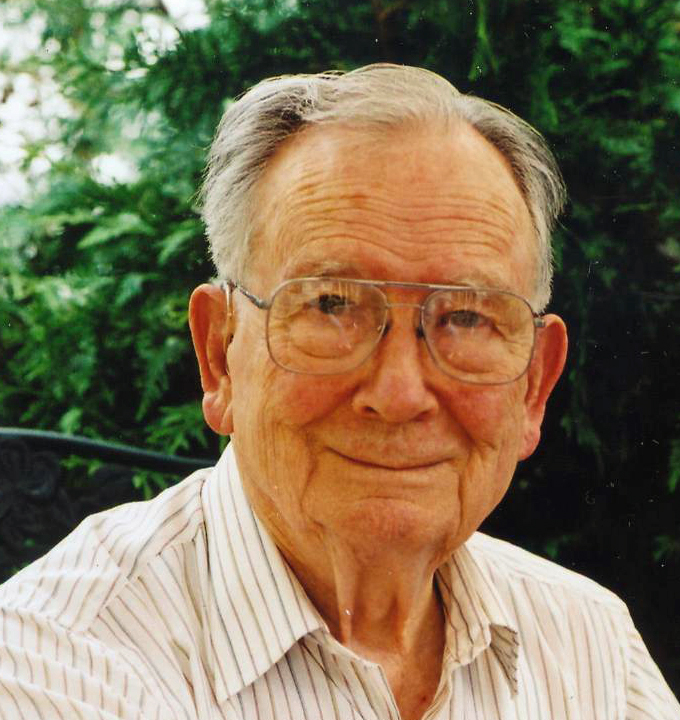
Historic Link with the Past: the Passing of Physicist Larry Johnston

Last Sunday (December 4), University of Idaho Emeritus Physics Professor  Lawrence H. “Larry” Johnston passed away in Moscow. “One of the last survivors of the Manhattan project,” Larry “is believed to be the only eyewitness to all three 1945 atomic explosions – at White Sands, New Mexico, and in Japan at Hiroshima and Nagasaki … ”

A full obituary is available from the Moscow-Pullman Daily News.

Although not an active member of the Idaho Academy of Science, Professor Johnston had two close links to our organization. Our recent President from the College of Southern Idaho, Mark Daily, said Johnston “was my first physics professor at the U of I and I did my senior project under him, building a spark arrestor for his HCN laser. Larry had a profound effect on me as a young man.”

There are, no doubt, other members of the Academy who likewise remember Johnston with respect and affection. His obituary spoke of him as a “natural teacher,” who looked for “teachable moments” in the most unlikely settings.

It is with some pride, that I – alerted by Mark – also mention that the Academy made Larry the 2010 recipient of our Distinguished Scientist Award. While, on paper, we honored him, it is equally true that he added luster to the Academy, and the teaching profession in Idaho.

The Journal of the Idaho Academy of Science described the many accomplishments for which Johnston received his Award. The item noted that, “His work on proton-proton scattering is still the definitive work on the subject.” It also points out that, “Dr. Johnston’s invention of the Exploding Bridge Wire Detonator continues to save lives today, since this detonator is now used to activate automotive air bags.”

Although Dr. Johnston attained many other fine achievements, interviewers inevitably returned to his link with the atomic bomb. Again quoting the Journal, “Dr. Johnston flew in observation planes during the the testing at Trinity site in New Mexico, and both delivery missions of bombs to Hiroshima and Nagasaki.”

Since this issue receives so much attention, let me digress a bit. Reporters almost invariably asked Johnston if he had any regrets about the bomb. Larry – a thoughtful, and deeply religious man – always said he felt “privileged” to help end the war quickly and save many more deaths, on both sides. (Your “blogster,” having studied that issue at some length, whole-heartedly supports that view.)

Beyond the war context, air bags continue to save lives, as do Dr. Johnston’s contributions to nuclear medicine. The Journal article also said, “When he was diagnosed with cancer several years ago, part of his treatment was irradiation from medical accelerators, which were great grandchildren of Larry’s early devices.”

The item commented that it was “not possible to hear Dr. Johnston speak and not think long and hard about the joys and duties of citizen scientists and engineers.”